“The Trend Is Toward More Compact Stadiums”
Lluis Herrero and Bernd Helmstadt (NUSSLI) discuss international trends in stadium construction, growing demands on planning and operation, and why soft factors are decisive for the success of a stadium project.
stadiaworld: What key trends are currently shaping international stadium construction?

Helmstadt: These developments apply equally to the German market. At the same time, technical requirements are increasing massively – especially due to media and TV productions. Issues such as camera technology, semi-automatic offside lines, and flexible roof solutions are influencing architecture and driving up complexity. At the same time, we are facing a shortage of skilled workers, supply chain risks, and inconsistent approval processes, which makes planning difficult and extends construction times.

stadiaworld: What challenges arise when renovating or expanding a stadium during ongoing operations?
Helmstadt: What is often underestimated is the impact of renovation phases on ongoing operations. During stadium renovation, there is often a lack of capacity, for example in the hospitality or VIP areas, which means a direct loss of revenue. In addition to the already high construction costs, the organizational effort required to maintain game operations, security, and marketing in parallel also increases significantly. To make matters worse, construction projects of this magnitude are rarely completed within the originally planned time frame, which further increases the economic and operational risks.
Herrero: In addition, fans today are much more demanding. A visit to the stadium competes with many other leisure activities. Match days in a situation where construction work has been going on for years are not very attractive – and it is no longer a given that spectators, sponsors, and event organizers will automatically return once the construction phase is complete.

stadiaworld: Why are soft factors such as fan experience, brand presentation, and customer loyalty becoming increasingly important in stadium projects?
Helmstadt: This is exactly where the so-called soft facts come into play. Marketing, customer relationship management, and the emotional attachment of fans are at least as important as building regulations and budgets. Comfort, quality of stay, and length of stay are directly related to the willingness to spend money – whether on tickets, food and drink, or sponsorship.
Herrero: Sponsors expect reliability and an environment that presents their brand in a high-quality manner. A construction site is rarely the right setting for this. That’s why it’s crucial to think early on about solutions that combine operation, quality, and flexibility — while also offering space to test new concepts, further develop offerings, and gradually prepare for the future stadium. This is exactly where interim solutions can provide valuable insights without jeopardizing existing relationships.

Helmstadt: In the future, stadium projects will have to be viewed even more holistically. Construction time, operation, marketing, and the fan experience all go hand in hand. Integrating these aspects early on minimizes risks and creates the basis for long-term success.
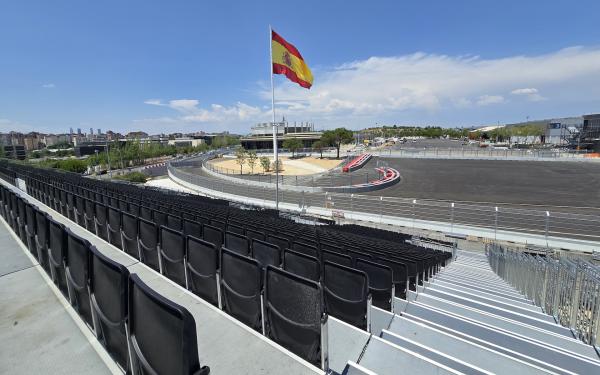
Herrero: Modular interim stadiums or temporary stadium extensions will play an increasingly important role in this. They create planning security, secure revenue, and enable a flexible response to temporal, economic, and sporting requirements. I am convinced that this way of thinking will become more established in the international stadium industry. (Stadiaworld, 30.01.2026)

- Company site: NÜSSLI Gruppe